Home / Rendering
House rendering in London
New render for whole houses, single elevations, extensions and dormers. Four systems, chosen to suit how your wall was built.
The four systems we use
Every quote names the system and the manufacturer, so you can compare it properly with anyone else's.
Silicone thin-coat
A mesh-reinforced basecoat with a thin, flexible, through-coloured top coat. It sheds rain and city grime well and copes with small movement. Our usual choice for cavity walls, new blockwork and over pebbledash.
Monocouche
A thicker one-coat coloured render, scraped back to an even, slightly open texture. Hard-wearing and well suited to new build walls and large plain elevations.
Sand and cement
The traditional three-coat job, finished smooth and painted. Tough and familiar, and often the right match when only part of an existing wall is being redone.
Lime
For solid walls and original stucco. Lime lets moisture leave the wall, which is how these buildings were designed to stay dry. Slower to apply, and worth the time.
Where render goes on a London house
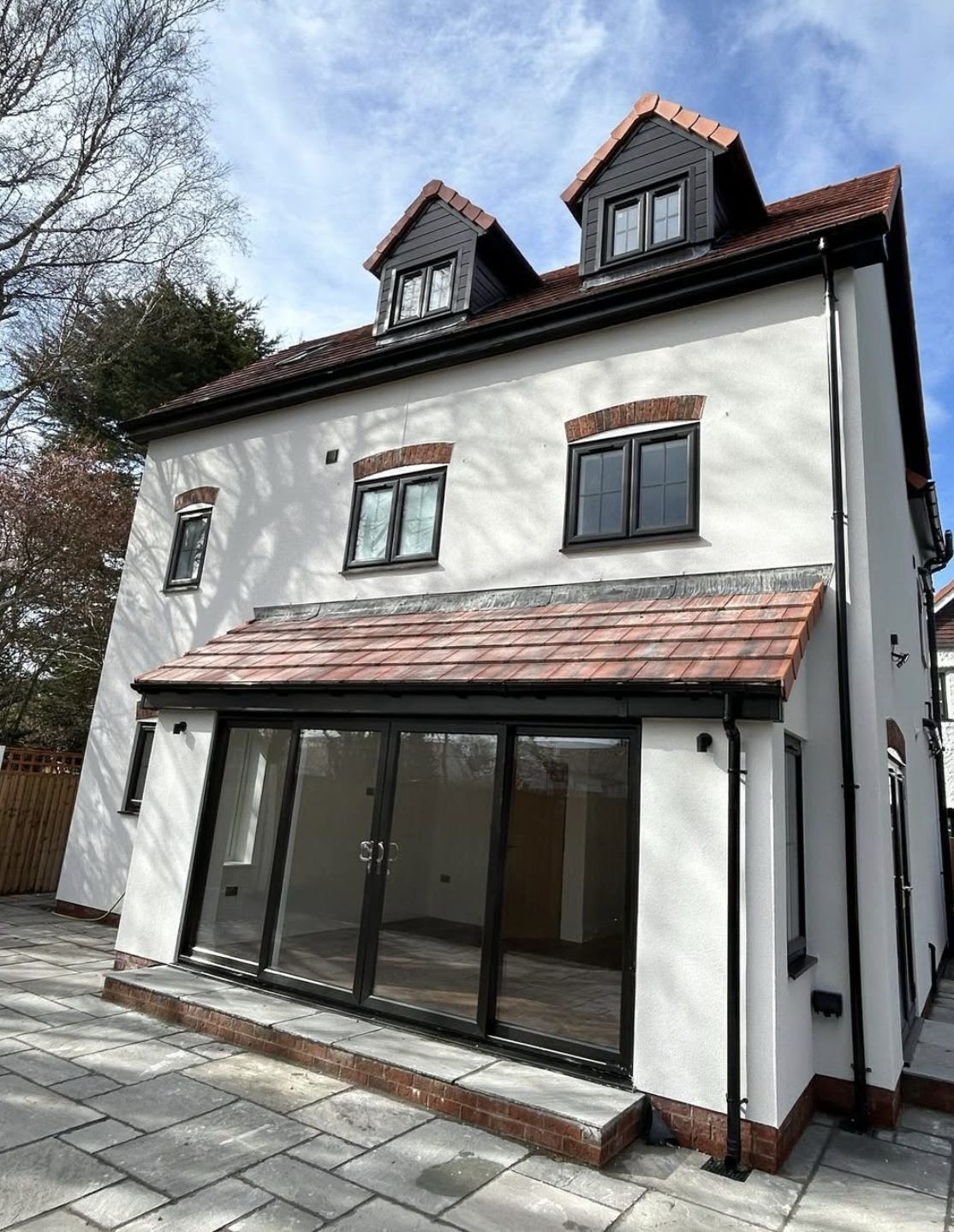
On most terraces the answer is not the street front. The front is brick or original stucco and is best repaired, not covered. The work is usually round the back and up on the roof.
- Rear additions and back walls that have been patched for decades
- Flank walls on end-of-terrace houses
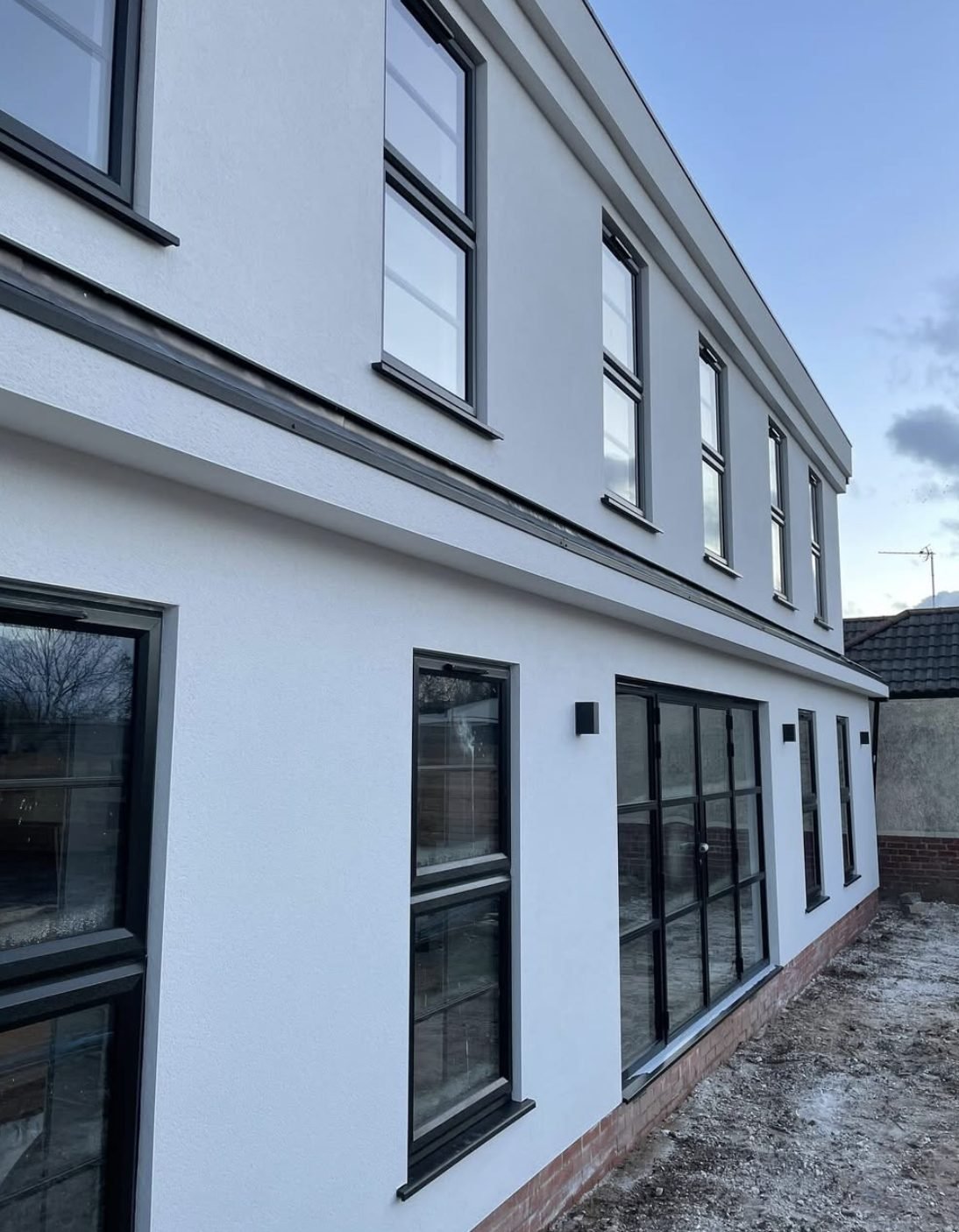
- Side-return and wraparound kitchen extensions
- Dormer faces and cheeks on loft conversions
- Party parapets, upstands and chimney stacks
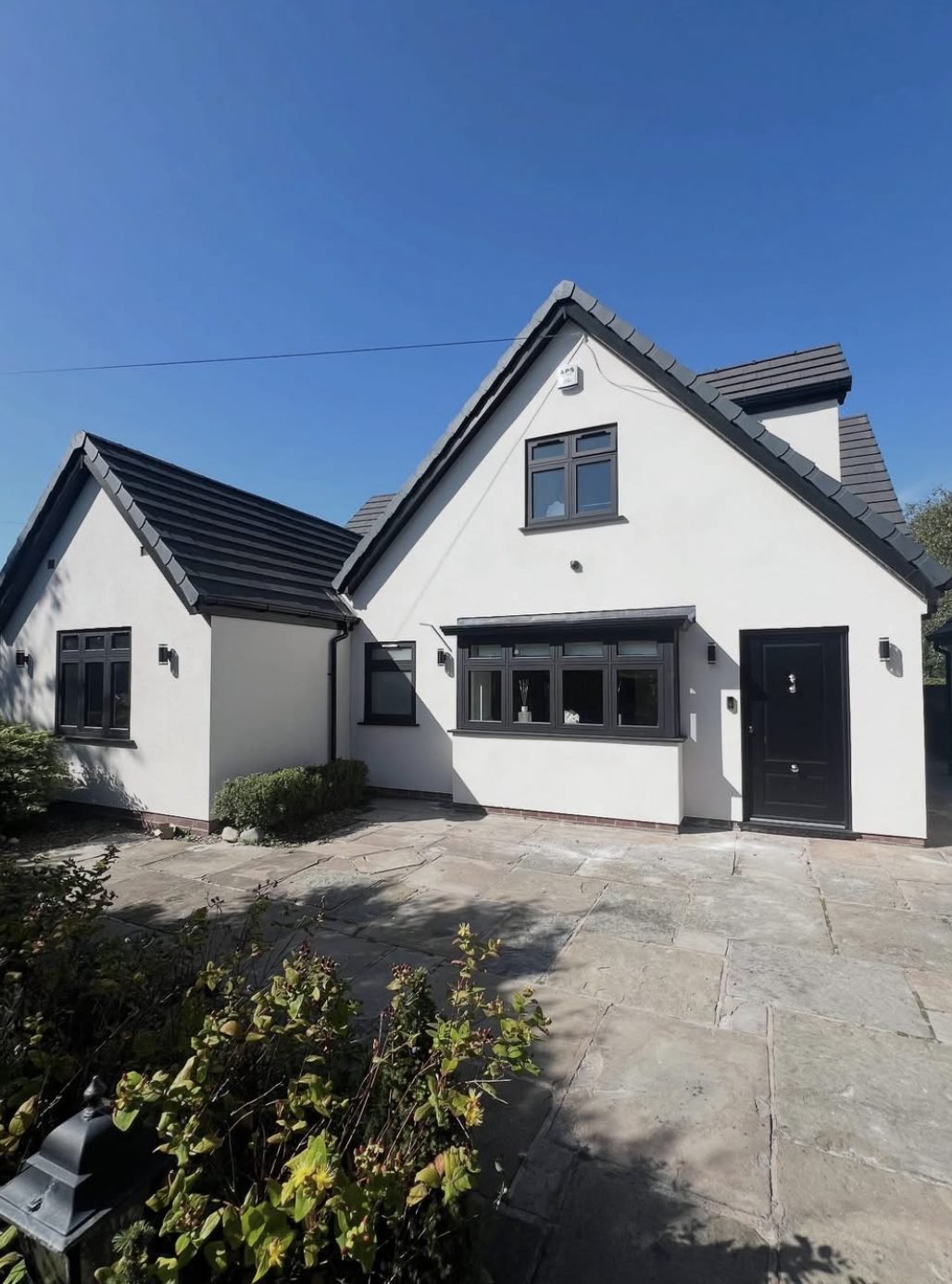
- Whole houses in the suburbs: semis, detached houses and bungalows
- Garden rooms, garages and boundary walls to match
How a job runs
The same order every time. The steps that get skipped on cheap jobs are the ones you cannot see once the top coat is on.
Site visit
We look at the wall, tap it to find hollow areas, check gutters, sills and ground levels, and work out access and scaffold.
Written quote
One price with the system named, the scaffold included and expected dates. Any permissions you need to get are flagged here.
Scaffold and protection
Scaffold goes up, then windows, doors, paving and planting are masked and sheeted.
Preparation
Loose and hollow material comes off. Cracks are dealt with, and beads are fixed to a line at every corner, reveal and stop.
Basecoat and mesh
The basecoat is built to the right thickness with reinforcing mesh bedded in, doubled up at the corners of openings where cracks start.
Finish coat
The top coat goes on in one pass per elevation so there are no day joints showing across the wall.
Cure, strike and clean
The wall is left to cure, then the scaffold comes down, pipes and fittings go back and the site is cleared.
Questions about rendering
Which render system is best for a London house?
There is no single best. Silicone thin-coat suits most cavity walls and new blockwork and needs the least looking after. Solid brick and old stucco often want lime so the wall can keep drying out. We recommend one after seeing the wall and tell you why.
Should I render the brick front of my Victorian terrace?
Usually we would advise against it. London stock brick is a big part of what the house is worth, it is hard to undo, and in many streets the council would not allow it. The back addition, flank wall and extension are a different matter and often benefit a lot.
Can you render just the extension or the loft dormer?
Yes. A lot of our work is exactly that: a new kitchen extension, the cheeks and face of a dormer, or one flank wall. Builders and loft companies book us for the render, and so do homeowners finishing a project.
What colours can I have?
Through-coloured systems come in a wide range, from brilliant white through creams, greys and stone shades to darker tones. We bring sample boards so you can judge the colour against your own brick, windows and roof in daylight.
Does render need painting afterwards?
Silicone and monocouche are coloured all the way through, so no. Sand and cement and lime are normally painted or limewashed, and that coating will need redoing over the years.
Will rendering make my house warmer?
Not by any amount worth claiming. Render keeps weather out of the wall, and a dry wall holds heat better than a wet one, but it is not insulation. If warmth is the goal, that is a separate conversation to have before any render goes on.
Ask about your house
Tell us what you are thinking of having done.
Not sure which system you need?
That is what the site visit is for. It is free and there is no obligation.