Home / Pebbledash
Rendering over pebbledash in London
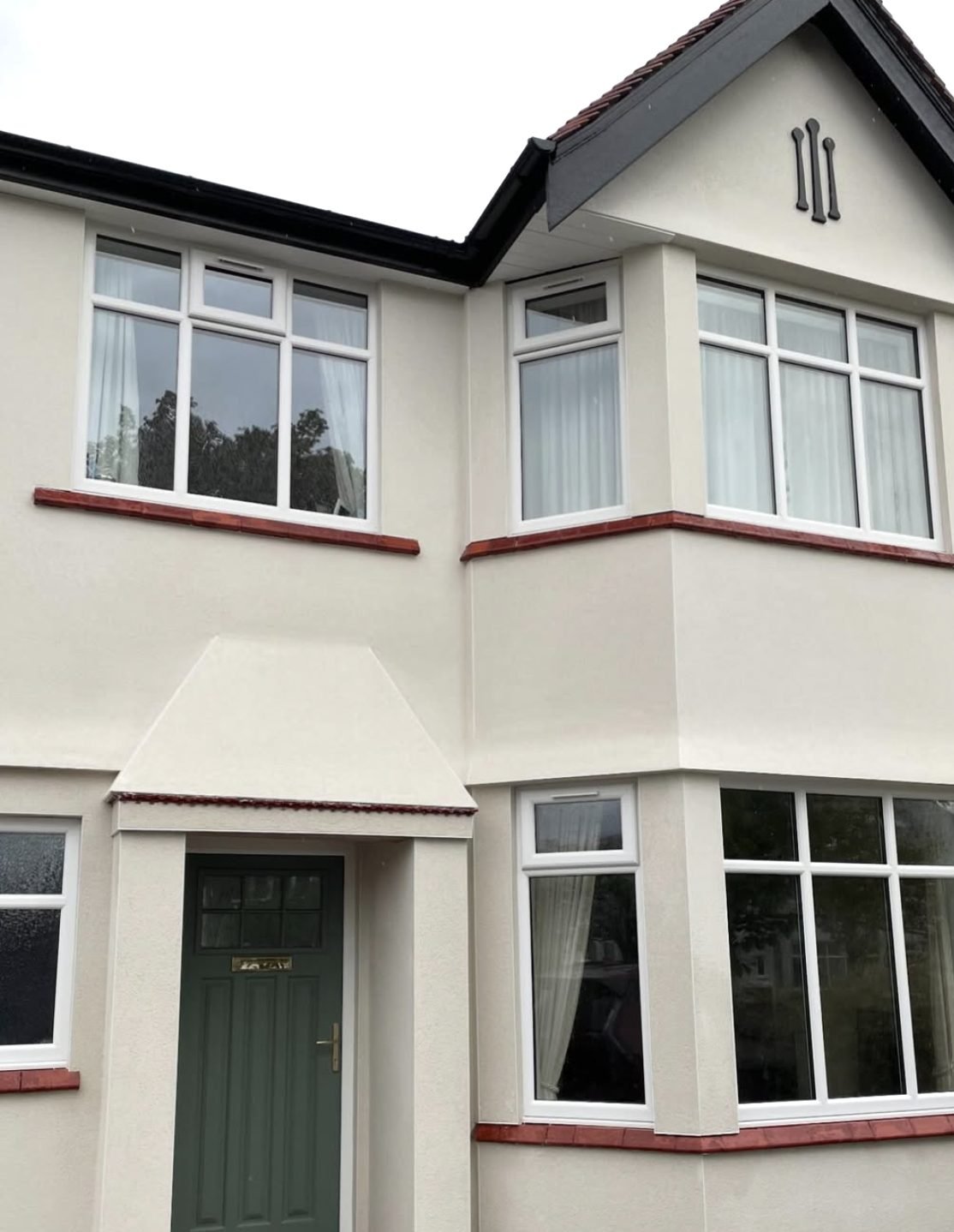
Outer London was built in pebbledash between the wars. If yours is grey, cracked or just dated, it can usually be covered with a smooth modern finish without stripping the wall.
Cover it or take it off
The decision comes down to one thing: is the pebbledash still stuck to the wall? We tap every part we can reach and listen. A solid knock means it can stay. A hollow, drummy sound means that area has let go.
Mostly sound: we cover it. The wall is cleaned, loose patches are cut out and filled, a levelling basecoat with mesh goes over the lot, and a through-coloured finish goes on top.
Mostly hollow: it comes off. We strip back to the brick or block, repair the wall and render it as new.
Most houses fall in the first group, with a few patches of the second.
How covering pebbledash works
Tap test and survey
Every reachable area is sounded. Hollow patches are marked on the wall so you can see them for yourself.
Clean and cut out
Moss, flaking paint and loose stones come off. Failed patches are removed back to a firm edge.
Beads and levelling coat
Corner and stop beads set the lines, then a basecoat fills the texture and brings the wall flat.
Mesh
Reinforcing mesh is bedded across the whole wall, with extra at window and door corners.
Finish
A silicone top coat in your chosen colour, applied one full elevation at a time.
Before you decide
Check the bays and sills
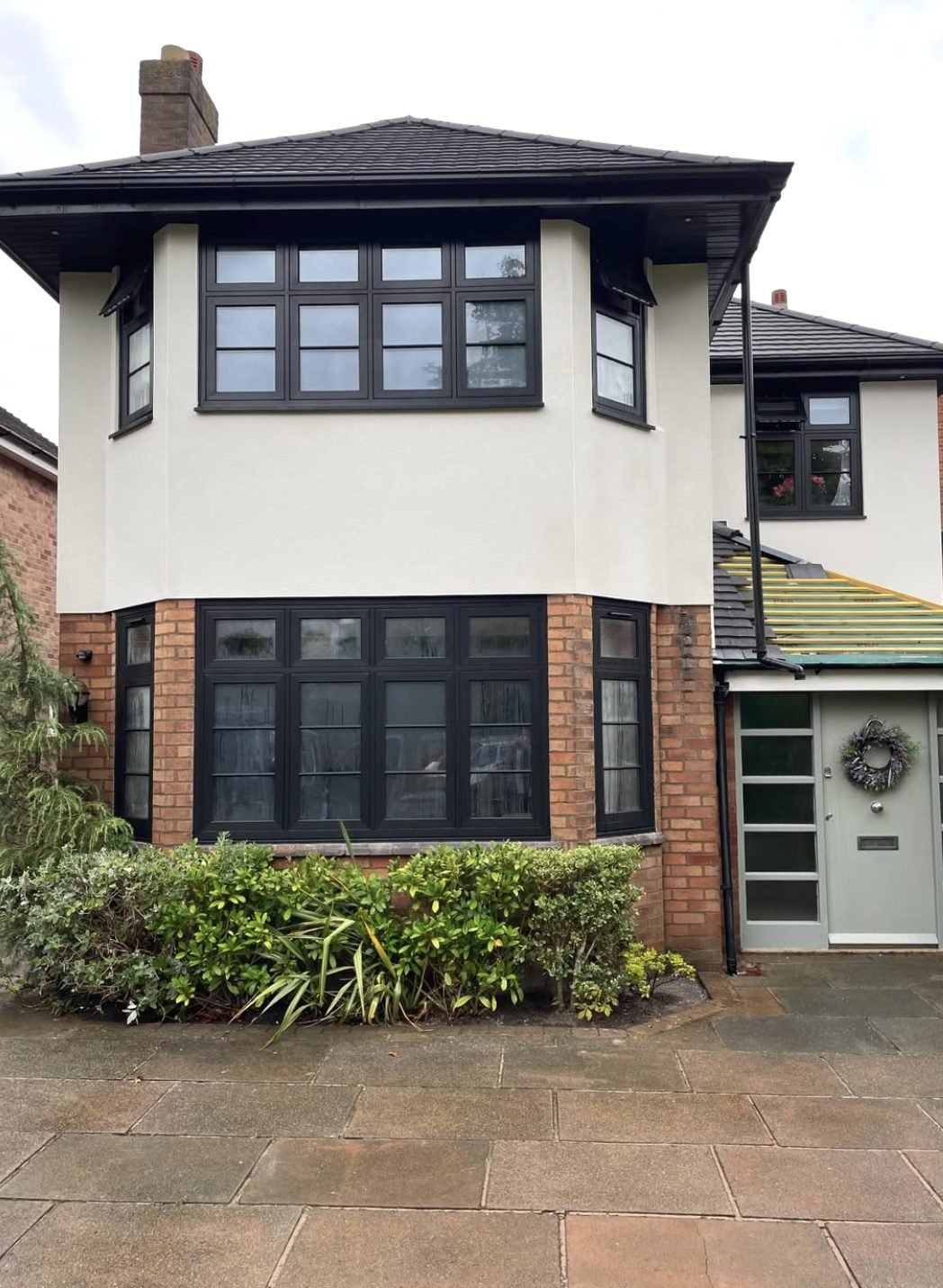
Interwar semis have curved bays, tile sills and timbered gables. Decide which features you want kept and shown. We work the render round them.
Talk to next door
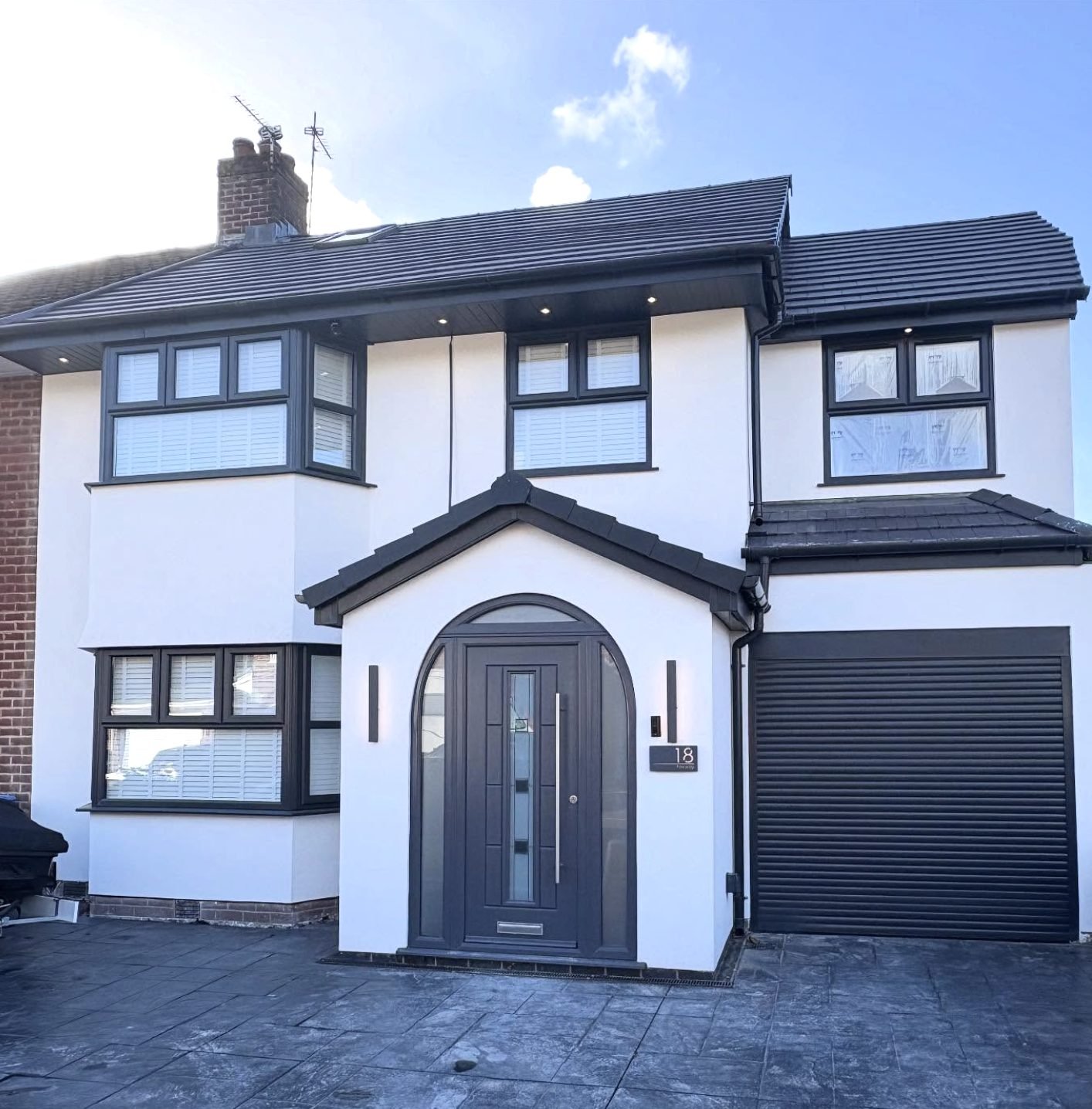
On a semi, the join with your neighbour is in full view. Doing the pair together looks best and shares the scaffold.
Look at the street
If most houses on the road are still pebbledashed and you are in a conservation area, ask the council before changing the finish.
Questions about pebbledash
Can you render straight over pebbledash?
Yes, as long as the pebbledash is still firmly attached. We tap the whole wall to check. Sound areas are cleaned, levelled with a basecoat and mesh, then finished. Loose areas are removed and made good first.
Is it better to remove pebbledash completely?
Only where it has to come off. Stripping sound pebbledash is slow and noisy and can damage the face of the brick behind, which then needs rendering anyway. Removal is the right call when large areas are hollow or the wall underneath needs attention.
Will my house end up with thicker walls?
Slightly. Covering adds roughly the depth of a finger to the wall. We check sills, pipes, vents and the roof edge at the visit to make sure everything still throws water clear, and extend or refit anything that needs it.
My neighbour's half of the semi is still pebbledashed. Will mine look odd?
A clean stop bead on the party line gives a tidy join, and it is a very common sight on London streets. If your neighbour wants theirs done too, doing both together gives one seamless front and saves on scaffold.
Can painted pebbledash be covered?
Usually. Flaking paint is removed and the surface is primed so the basecoat grips. If the paint is the only thing holding the dash together, we will find that out at the tap test, before any price is agreed.
Get a price on your pebbledash
Front only, or all the way round? Let us know and we will arrange a visit.
Tired of the pebbledash?
We will tap the wall and tell you whether it can be covered.